
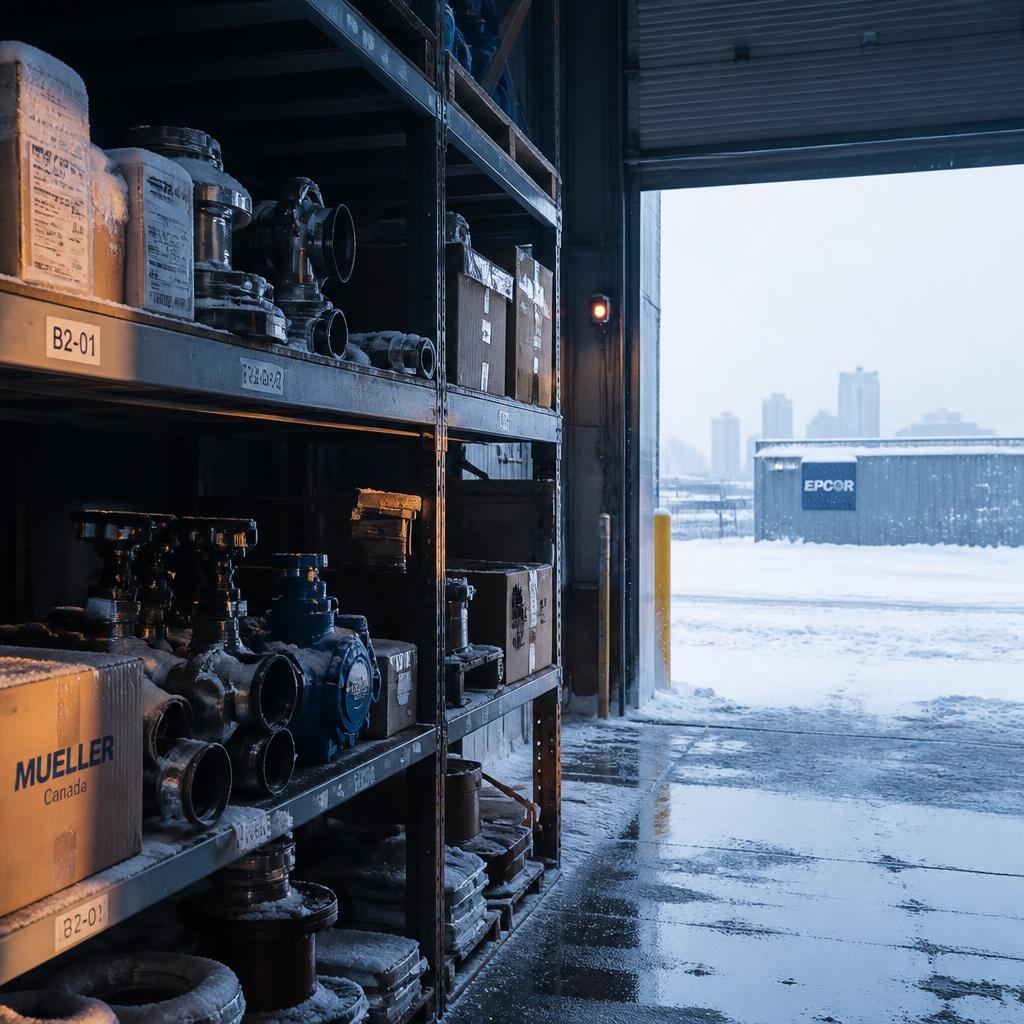
An Edmonton winter doesn't just slow down a job site, it changes how materials behave. Plastics get brittle, batteries lose capacity, and products rated for "standard" conditions can fail in ways that would never show up in a warmer climate. Most of this is predictable and avoidable if you know what to look for before you order, not after something breaks in February.
Plastics and cold: why "outdoor rated" isn't automatically "cold rated"
Standard nylon cable ties, plastic bins, and jobsite organizers are often rated for general outdoor use, meaning they resist UV degradation and moderate temperature swings. That's a different spec than cold-impact resistance. Below roughly -20°C, many standard plastics become significantly more brittle and prone to cracking under stress or impact, even if they were fine in a fall or spring install.
This matters most for anything installed outdoors that will be handled or adjusted during winter, like a tie holding a cable bundle that needs to be repositioned, or a storage bin that gets dropped or kicked around a yard. If a product's spec sheet doesn't list a cold-impact rating, assume it wasn't tested for it, and consider a cold-rated alternative for anything installed or stored outdoors through winter months.
LED lighting and cold weather battery performance
As covered in more detail in our LED work light guide, lithium-ion batteries lose usable capacity in cold temperatures, sometimes significantly. A battery-powered work light rated for four hours of runtime at room temperature might deliver closer to two and a half hours at -25°C. This isn't a defect, it's basic battery chemistry, but it catches crews off guard when they plan a job's lighting around a spec sheet number from a warmer testing environment.
Corded lights don't have this problem since they're not battery dependent, which is worth factoring in for any job that runs through the coldest months, even if battery lights are more convenient the rest of the year.
Storage and inventory: what happens to consumables sitting in an unheated warehouse or yard
Products stored in an unheated warehouse or outdoor yard through an Alberta winter go through repeated freeze and near-freeze cycles, plus low humidity. For most cable ties, labels, and hardware, this isn't a major issue if the product is rated for the storage conditions. But adhesive-backed labels are a common failure point: cold temperatures can affect adhesive performance both during application and over the life of the label, especially if a label is applied cold and then moved into a heated space, or vice versa.
If your facility labels equipment or racking outdoors or in an unheated space during winter, check that the label adhesive is rated for cold-temperature application, not just cold-temperature durability once applied. Those are two different specs, and a label that holds up fine once applied at room temperature can fail to adhere properly if applied at -15°C.
Delivery and lead time planning around winter conditions
Winter road conditions across Alberta can add unpredictable delays to freight, especially for rural or remote job sites and oilfield locations. Building a slightly longer lead time buffer into winter orders, particularly for anything time-sensitive like a scheduled install date, avoids the scramble of a delayed shipment holding up a crew.
A practical winter-readiness check for facility and site managers
Before the cold sets in each year, it's worth reviewing: which outdoor-installed consumables are rated for the temperatures your site actually sees, not just "cold weather" in general terms; whether battery-powered equipment needs a cold-weather runtime adjustment in scheduling; and whether any adhesive-based products (labels, tapes) need a cold-rated alternative for winter application. A short review like this once a year catches most of the predictable failures before they become an on-site problem.
Gridwell sources cold-rated cable ties, LED lighting, and labeling products built for Alberta's actual winter conditions, not just generic "outdoor" specs.
Need it quoted?
Send us your product list, quantities, and specs. We reply to every quote request within one business day.
Request a QuoteMore from the blog
September 2026 · 5 min read
LED Work Lights: A Buying Guide for Alberta Job Sites and Yards
September 2026 · 5 min read
Cable Management Standards Every Contractor Should Actually Know
September 2026 · 5 min read
Bulk Ordering vs Just-In-Time: What's Actually Cheaper for Alberta Trades and Warehouses
September 2026 · 5 min read
The Real Cost of a Bad Supplier Relationship
September 2026 · 4 min read
How to Choose the Right Cable Tie for Your Job Site (It's Not One-Size-Fits-All)
September 2026 · 4 min read
Warehouse Labeling 101: Why Barcode-Ready Rack Labels Save Your Team Real Hours
September 2026 · 4 min read
Why Local Delivery Still Beats the Big-Box Supply Run for Alberta Contractors
September 2026 · 4 min read
Tariffs and Your Supply Chain: What Alberta Trades Should Know About Sourcing in 2026
September 2026 · 4 min read
5 Signs Your Crew Is Losing Time to Poor Jobsite Organization
September 2026 · 5 min read
Plenum-Rated vs. Standard Cable Ties: What Alberta Electricians Need to Know
September 2026 · 6 min read